


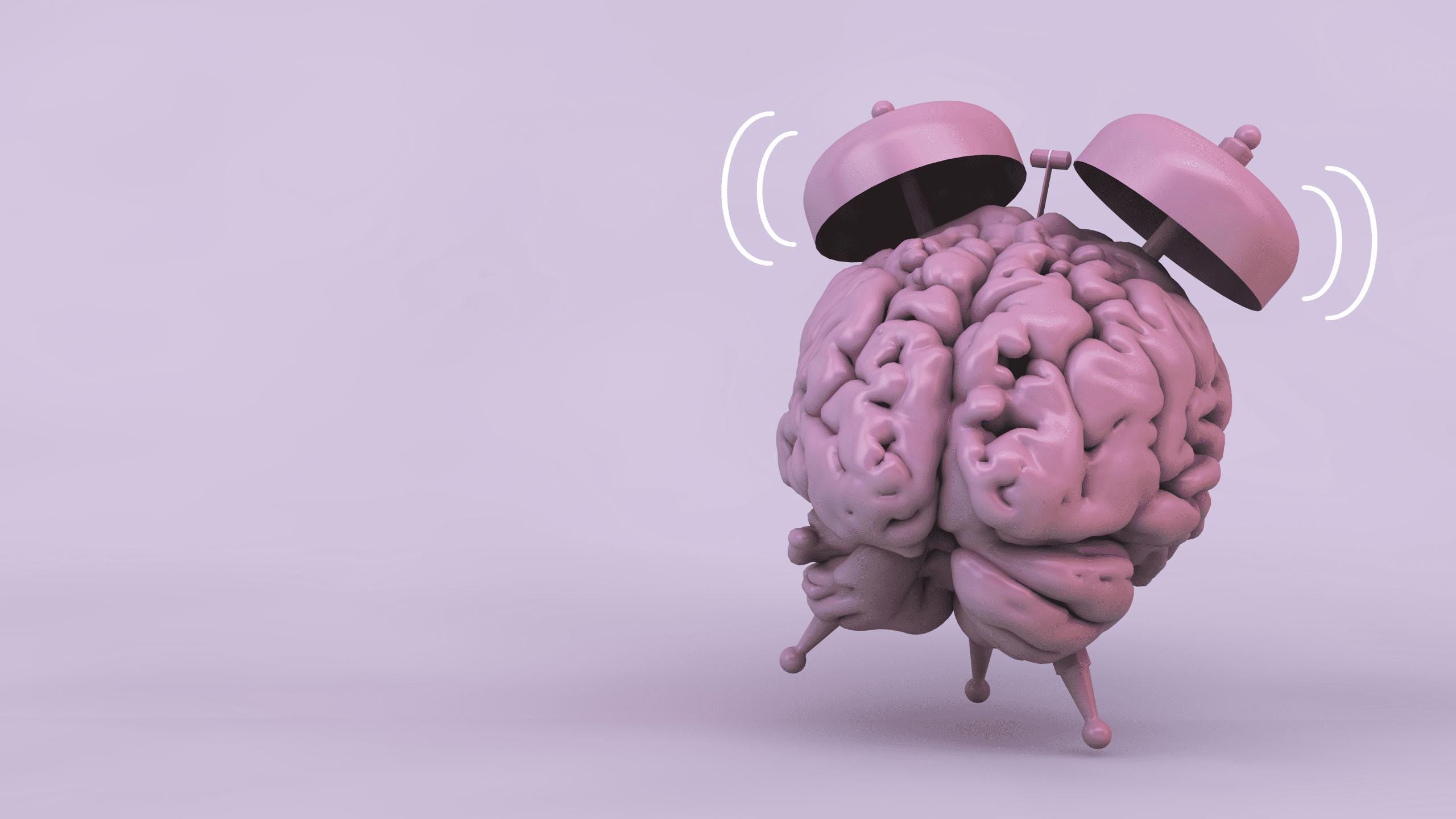
There are so many aspects of motherhood which just aren’t spoken about. Almost all women experience thoughts and mental images which are unwanted, negative, repetitive, and potentially scary during pregnancy and postpartum. This is the norm and not the exception. Common thoughts include:
- Thoughts about harm coming to your baby, including thoughts of harming your baby yourself
- Concerns about SIDS
- Being worried about losing your baby
- Disturbing sexual thoughts, such as fear of touching your baby inappropriately
- Worries about illness and/or contamination
In this article, I’ll talk more about this very common experience so you have a greater understanding of what it is, why it might be happening, and how you can start to manage these thoughts and reduce the distress they can cause.
What Are Scary Thoughts?
As the examples above show, scary thoughts are often the worst things you can imagine. Thoughts that directly contradict your deepest values, hopes, and instincts. The things which most go against your hopes and values. This is part of what makes them so distressing.
Firstly and most importantly to understand about these thoughts…
- These are just thoughts.
- They do not reflect any real desire or intent to cause harm.
- There is no evidence that having these types of thoughts leads to acting on them.
Although it might not seem like it, the fact that you’re distressed by these thoughts is reassuring. It shows that you know the difference between right and wrong and can identify that the thoughts are not in-line with who you are and what you want to do.
However, knowing that it’s normal to experience these thoughts does not necessarily take away the distress that they can cause. They can feel overwhelming, frightening, and may cause high levels of anxiety. For some, the distress becomes so intense that it starts to interfere with daily life.
People often try to reduce this anxiety by engaging in behaviours they normally wouldn’t do such as avoiding everyday activities, excessively cleaning, or repeatedly checking on their baby. These coping strategies might offer short-term relief, but they can also make things harder over time.
Secrecy, Guilt, and Shame
Like many others, you might find yourself keeping these intrusive thoughts a secret. Many people experience shame around having such thoughts. Shame is where we link having such thoughts as being a sign that we have done something wrong or are a flawed person.
Unfortunately, secrecy feeds shame. When we keep these thoughts hidden, we start to believe we should be hiding them. That we must be doing something wrong. And the more shame we feel, the more likely we are to struggle with our mental health. Shame can also prevent us from seeking support. It becomes a painful cycle.
One way to break that cycle is to start talking about it. I really like this website: Speak the Secret. It shares real, anonymous examples of scary thoughts submitted by mothers. You’re most definitely not the only one experiencing this!
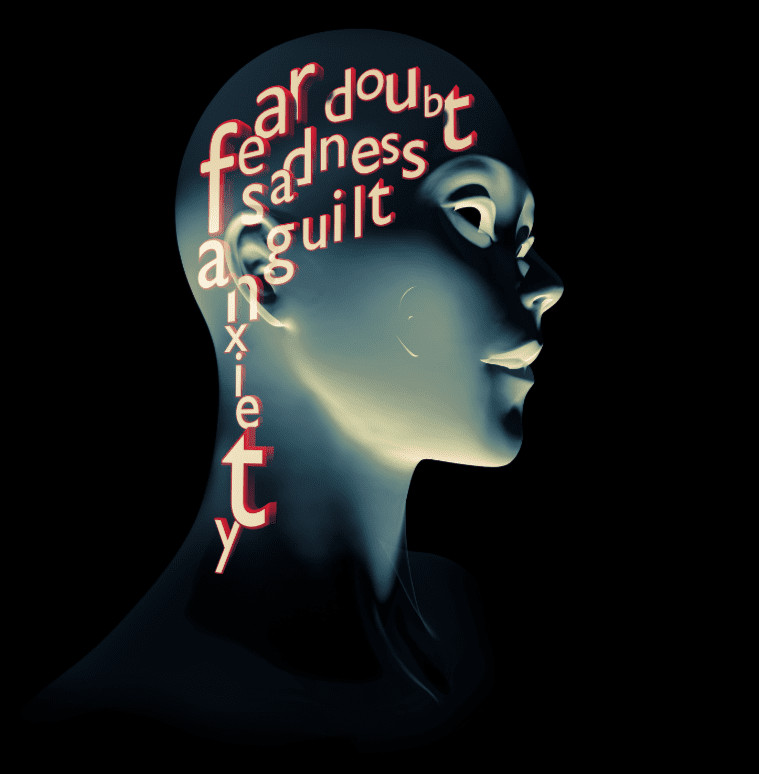
So Why Do We Get Scary Thoughts?
Since most mothers experience these thoughts, we can say that they are a normal part of motherhood. As with all perinatal mental health challenges, these thoughts are not a reflection on you as a person or your capabilities as a mother.
During the perinatal period, your brain is programmed to be highly alert to potential dangers so it can protect your baby. In this context, it makes sense that your mind might go into overdrive, scanning for worst-case scenarios. The difficulty comes when we’re not able to learn over time that these new situations are safe and instead our anxiety and distress stays high.
Other stressors which make intrusive thoughts more likely in the perinatal period include:
- Sleep deprivation, which affects mood, emotional regulation, and clear thinking (not that you need reminding!)
- Hormonal fluctuations, which can throw off our emotions and thoughts as well as effect us physically
- The huge life changes, uncertainties, and constant adjustments that come with becoming a parent.
So What Can Be Done To Help Manage These Thoughts?
In and of themselves, these types of thoughts are not an issue and nothing needs to be done with them. However, if like many, you’re finding that they are causing you distress or impacting your life in a negative way, you may wish to look at them.
Overall, the aim is to reach a place where we are able to notice as the thought arises and then let it pass without adding further evaluation. This means that we will be moving away from having a thought and then interpreting it and having a negative feeling and reaction. Instead, getting one of these thoughts will become a neutral event. Here are some possible approaches that can be helpful to reach this place.
Moving Toward Accepting the Thoughts
Getting to the point where we can accept the intrusive thoughts as they arise is key. Acceptance works a lot better than trying not to think of the thoughts, as this just gives them more strength (as an example, what happens if I say ‘try not to think of a cat in a pink tutu’?)
Acceptance is the choice to face reality as it is, even when it feels uncomfortable or scary. Acceptance doesn’t mean that we like how things are, or that we don’t want to change how things are, but it does free up the energy that’s usually lost when we’re in denial. Once we can accept the thoughts as they are, we can also prevent adding the additional layers of evaluation which lead to distress.
Some ways we can work towards accepting these thoughts are:
- Practice mindfulness. Mindfulness can be thought of as paying attention to the present moment on purpose and non-judgementally. We are focusing on being in the present rather than the past or future.
- Visualise thoughts as passing objects. From here, we can develop the skill of not attaching to the thought, but instead letting it pass. It can be really helpful to imagine the thoughts as leaves passing on a stream. This recorded practice helps guide you through this process.
- Use grounding statements. We might also use statements which help to remind us how we can cope when getting intrusive thoughts. Some people find these helpful to carry around on cards for when they are needed. Statements might include:
- I notice that I’m having a scary thought
- I know that it’s okay to get these thoughts and that nothing bad is going to happen
- I know that this thought will pass if I let it.
Like any skill, acceptance takes time and practice. It’s about gradually building your ability to sit with discomfort and remembering that no harm comes from having a thought. Below is more information on how you can build this ability.

Moving Away From Being in a Threat State
When we’re distressed by intrusive thoughts, we’re in a state of threat. In this state, the body and mind act as though we’re in danger. Even when we’re not. You might experience anxiety with symptoms such as racing thoughts, tension, and a racing heart. This is sometimes called the fight-or-flight response. It’s the body’s way of trying to protect us by staying alert and scanning for threats. While this system is designed to keep us safe, it can actually increase our distress, especially when it begins to see danger where none exists.
To counteract this threat state, we can work to build the strength of the opposite state: a soothing state. This is a state of calm and safety. Strengthening this part of the nervous system helps us to sit with the discomfort that comes us with intrusive thoughts and to remember that no harm comes from these thoughts.
Here are two practices that can help you activate this soothing system:
- Soothing Rhythm Breathing. This simple breathing exercise helps calm the body and mind by slowing and steadying your breath.
- Butterfly tapping. This is a technique where you gently tap your fingertips on the sides of your chest (usually near your collarbone) while crossing your arms over your chest, kind of like giving yourself a hug. This helps the body and then the mind to reach a more soothed place.
We can initially practice these exercises when we are not feeling too overwhelmed. Then, as we start to get familiar and comfortable with them, we can start to find them helpful in times of overwhelm. I know it can feel overwhelming to try and find time for an additional thing in the perinatal period, but even just a few minutes per day of practice can start to make a difference.
Looking at Your Thought Patterns and Beliefs
Often, we will have thought patterns or underlying beliefs which act to increase the distress that intrusive thoughts cause. These may include:
- Thinking we need to be perfect
- Having difficulty tolerating uncertainty
- Believing that if we worry a lot, it will stop bad things from happening
- Not feeling confident that we can manage and solve problems when they arise
- Thinking that it’s selfish to take care of our own needs
By unpicking our thoughts, emotions, and behaviours, we’re able to better understand how they might be adding to our distress. Once we have identified them, we can start to evaluate them further:
- Is there really any evidence for the thoughts?
- Is there evidence from the past that goes against the thoughts?
- Have I mis-predicted worst-case scenarios in the past?
- What would I tell a friend in the same situation?
- Have I been able to adapt and cope in difficult or unexpected situations before?
For some people, focusing on and evaluating their thoughts more can cause further distress. For these people, working through this process with a therapist or focusing on the other approaches in this article will be a better path to take.
Stopping Compulsive Behaviours
If you’re finding that you’re carrying out certain actions to try and make the intrusive thoughts go away (like excessively checking on your baby or tidying) these are known as compulsive behaviours. While they may offer short-term relief, they often reinforce the anxiety in the long run.
In therapy, we can work together to gradually reduce the need for these behaviours. This process involves learning to sit with the thoughts without responding in the usual way. This is something we would only do if you felt ready to. During the process, you would also learn various techniques to help you manage your distress.
Although this can feel like an overwhelming approach, carrying this process out helps to teach the brain that if we don’t carry out our usual actions, the bad outcome that we were expecting does not happen. Over time, we also learn that the distress does lessen on its own, without needing to rely on the compulsion.
Talking About Your Scary Thoughts
It takes a lot of energy to hold a secret. Talking about your scary thoughts with the right person can help release the shame and energy-drain that normally comes with a secret.
If you choose to talk to someone in your life, it might help to first share a bit of what you’ve learned about these thoughts so they can better understand what you’re experiencing and how to support you.
Therapy can also be another avenue for you to discuss your experiences and be met with empathy, understanding, and support.

Final Thoughts
Intrusive thoughts have no link to actual harm being caused to your baby. In fact, the very fact that you’re distressed by these thoughts shows that they don’t reflect your true values or intentions.
However, the distress that often accompanies these thoughts can be debilitating. Hopefully this article has given you a greater understanding of what these thoughts are, why they happen, and some approaches you can take to tackle the distress they cause. As with all skills, the approaches mentioned above take time to develop. The road to success will likely be filled with times of stagnation and challenge as well as improvement. If you find that these approaches don’t work straight away, it doesn’t mean that improvement isn’t possible, it may just be that another approach is needed.
If you feel that you would benefit from further 1:1 support to tackle intrusive thoughts, you can find out more about my practice here or contact me with any questions here. I also offer a free, no-obligation 20-minute consultation to discuss how I can support you. You can book that here.
Important note: If you do have an actual sense of wanting or intending to hurt yourself or your baby, then accessing immediate support is the best course of action. In the UK, you can call 999 or visit your local A&E. A mental health emergency is as serious as a physical health emergency and this is absolutely a correct use of these emergency services.

Megan Baldry
I am a counsellor and psychotherapist who supports women with their mental health and wellbeing during the perinatal period.
I’m a BACP registered therapist with a masters degree in counselling and psychotherapy and specialist training in perinatal mental health.
I offer sessions online and via phone in the UK. I offer regular and ad-hoc therapy sessions which are a space for you to be supported and work on goals that feel meaningful to you.
I also produce blogs and videos around therapy and the common challenges and transitions that come up in the perinatal period.


Share: