


Postnatal depression is a term that we hear often but which there can be alot of misunderstanding about. In this article I’ll be covering what postnatal depression is, why you may experience it, how it shows up, and what can help you feel like yourself again.
What is Postnatal Depression?
Stats tell us that 15-20% of women experience depression in the first year after birth. However, these figures are very likely to be an underestimation, as many people struggle silently without receiving support or being included in official statistics.
Postnatal depression refers to a persistent experience of low mood and other symptoms following the birth of a baby. These symptoms may include:
- A loss of energy or motivation
- Feelings of inadequacy or failure
- Feeling emotionally detached including from your baby
- Anxiety and/or irritability
- A loss of joy or excitement about life
- A sense of emptiness
- Anger or resentment, including directed toward your baby
- Feeling overly clingy with your baby due to fear of losing them
Postnatal depression can show up as a lack of positive feelings, the presence of negative feelings, or both.
For some people, postnatal depression affects how they feel in their relationship with their baby. You might struggle to understand your baby’s needs or find caring for them incredibly effortful and unrewarding. For others, postnatal depression doesn’t impact the bond with their baby or may even help them through the depression. Both experiences are equally valid and say nothing about your worth as a parent.
It’s also important to remember that as a mother, you are still a person in your own right. Feeling a wide range of emotions such as anger, sadness, frustration, or resentment is perfectly normal. These feelings alone aren’t a cause for concern. They become more significant when they begin to feel stuck, overwhelming, or interfere with your day-to-day wellbeing and ability to parent in the way you’d like to.
Why Does Postnatal Depression Happen?
There isn’t one clear cause of postnatal depression. Instead, many different factors can increase the likelihood of experiencing it. Because you’re a unique individual, your life experiences and personal makeup mean the reasons behind your symptoms will be unique to you.
As you read on, you’ll see that understanding what may have contributed to your experience is often an important first step toward feeling better.
Some common contributing factors include:
Lack of Support
One of the most significant risk factors for postnatal depression is a lack of support. In our modern world, so many mums are raising children in environments that just don’t align with how humans have evolved to parent. We have evolved for there to be a village raising children– small, close-knit communities where multiple caregivers share the responsibility of raising children and supporting new mothers during their transition into motherhood. For many, this is so, so different to the isolated environments they find themselves in today.
Adjusting to a New Life
So much is changing postpartum. When you are trying to make sense of your new life, identity, and relationships it’s natural for intense emotions to come up. There can also be feelings of loss or grief for aspects of your life that have changed or are no longer possible.
When we go through periods of change, it’s also normal for past and unresolved experiences and traumas to resurface.
All of these layers take time and space to unpick. Being able to explore and understand who you are now whilst also grieving those old parts of you is alot to navigate. But if we don’t go through this process, emotions can build up over time and weigh you down.
Feeling Undervalued: The Social Roots of Postnatal Depression
Depression is known to be closely linked to how we feel we belong and are valued in society. When people perceive themselves as unvalued and not belonging, they often withdraw socially. This is thought to be a protective response to avoid conflict.
In todays world, many mums don’t feel valued or have a sense of belonging. Studies show that up to 90% of mothers feel judged for their parenting decisions. Postpartum, many mums also find themselves quickly thrown into a role and identity which isn’t widely recognised, approved of, or rewarded.
It’s therefore no wonder that many mums feel un-held and unsupported as they navigate postpartum and end up naturally withdrawing.
Lack of Sleep
We know that a lack of sleep is closely linked to higher rates of depression. During sleep, our brains process the emotions and experiences of the day, helping us regulate our feelings more effectively. Without enough rest, our ability to respond to stress with calm and reason decreases, as does our capacity for positive emotion.
Oxytocin and Its Role in Postnatal Depression
Research shows that women experiencing postnatal depression often have lower levels of oxytocin, the hormone responsible for fostering feelings of closeness, warmth, and love. However, it’s not yet fully understood why some women have different oxytocin levels than others.
There is also some newer research suggesting that people respond to oxytocin in varied ways. For instance, those who have experienced insecure relationships or adverse experiences early in life may be less likely to experience oxytocin’s positive effects. Instead, they might be more prone to emotions like anger, fear, mistrust, and sadness when oxytocin is released.
The Impact of Stressful Life Circumstances
We know that stressful circumstances such as financial difficulties or domestic violence are linked with higher rates of postnatal depression. High levels of stress can also affect your ability to bond with your baby. This isn’t a conscious choice or a reflection of your love, but a natural response to being in a stressful situation.

Postnatal Depression is Not Your Fault
When looking at all the factors that can contribute to postnatal depression, one important thing is true: it’s not your fault.
Postnatal depression is not caused by:
- Not being a good enough mum
- Not loving your baby enough
- Something being inherently wrong with you
These are all things which depression might make you think are true. It’s very common to feel guilty for experiencing postnatal depression or to think that there is something wrong with you for not enjoying motherhood.
But postnatal depression is not a personal failure.
It is a natural and understandable response to your unique set of life circumstances. Whether that’s a lack of support, exhaustion, previous trauma, or overwhelming change.
Postnatal depression is also a temporary experience which you’re able to overcome to feel like yourself again.
The problem is that when depression and guilt takes hold, it tends to drive further isolation. You may pull away from people or activities that once brought connection or joy and yet these are exactly the things we need to support our wellbeing. The more you withdraw, the more deeply stuck in the cycle of depression you can become.
Ways to Work Through Postnatal Depression
From my experiences working with clients with postnatal depression, often the most valuable step to take is understanding more about what you are feeling and why. I have found over and over again that when people have the time and space to go through this process, there is almost always an understandable and logical reason why life feels so difficult. From this place of greater understanding, it then becomes a lot more possible to make changes which are best suited and meaningful to you.
Therapy is designed to support you through this process. A therapist is trained to help you explore your world and better understand it. To help you to connect to emotions that you may have pushed down or become numb to. To sit with you as you process difficult emotions and past experiences. A therapist can also notice the patterns or beliefs which may be keeping you stuck unknowingly (we all have these!).
Once you have that understanding of why you feel the way you do, it becomes a lot more possible to make meaningful changes. For me in my practice, this is where I’ll often weave in psychological knowledge to help you to begin to change the cycles and patterns you may find yourself in. Whether that be dealing with guilt, people-pleasing, social anxiety, perfectionism, or something else.
In saying how valuable therapy is, I also know that therapy isn’t sadly accessible to everyone. If you are looking to navigate this process on your own, here are some thoughts to help you in the process…
Connecting to Your Emotions
For many, this is not a skill that comes easy. Especially postpartum where it can be so easy to tune into babies needs and ignore our own.
Tuning into your inner world takes practice. You might start by pausing at different points in your day to check in with yourself. What are you feeling in your body? What thoughts are coming up in your mind?
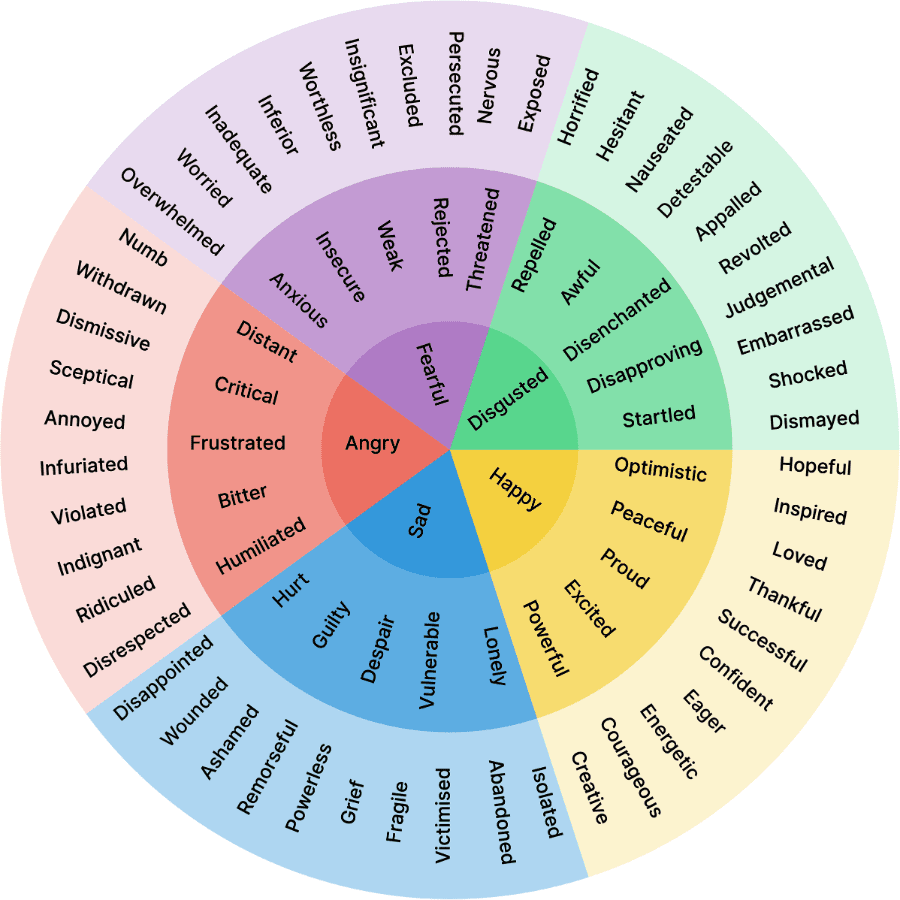
You can try to label the experience as best you can. Over time, you’ll likely become more precise. An emotions wheel (like the one below) can be a helpful tool for this process.
This skill also means you can start to consider how you are feeling at different points of the day. Are there certain situations which leave you feeling worse? Are there moments where you get some relief? This can help you get closer to understanding your situation better.
Being with the Emotions
It can be very painful and overwhelming to sit with some of these emotions. It can be so tempting to push them down or distract ourselves and while this can give temporary relief, it often doesn’t resolve the underlying feelings. Making space for our emotions instead allows us to process them and move forward. Maybe it’s the grief for old parts of your life or disappointment for the support you didn’t receive postpartum.
During this process, the key is to find a pace which allows us to acknowledge these feelings without becoming too overwhelmed. If the emotions do become too intense, grounding exercises can be one helpful tool to bring you back to the present, safe moment.
Breaking the Cycle of Withdrawal
There are many different approaches that can support recovery from postnatal depression, and it’s impossible to cover them all here. But here is some information on a cycle that many people find themselves caught in.
When you’re feeling depressed, it’s common to lose motivation and stop doing the things that usually bring joy, meaning, or connection. As those activities fall away, your world can become smaller, and your mood may dip even further.
If we think about how to break this cycle, a helpful place to start is by gently reintroducing small activities into your day. Things you might look forward to, or that bring even a small sense of connection or joy. You might not feel excited about these things at first, and that’s okay. It’s very common to go through the motions initially. But over time, these small steps can begin to shift how you feel.
Of course, being postpartum adds a whole other layer of complexity to this. Your time, energy, and freedom are often limited. That alone can bring up a lot of grief. Part of this process can be trying to discover new ways to experience joy and connection within your current reality.
Many mums also wrestle with guilt when they take time for themselves. Often, this guilt is shaped by beliefs and past experiences about what a “good mum” should be or do. If that’s something you’re struggling with, you may want to explore those beliefs with curiosity and compassion. I also talk more about navigating mum guilt elsewhere on my blogs and social media accounts, if you’d like to explore that topic further.
Final Thoughts
Experiencing postnatal depression can be incredibly painful and isolating. If you’re struggling, it’s important to remember that good mums experience postnatal depression and it is possible to feel like yourself again.
If you’re struggling and feel you would benefit from further 1:1 support, you can book a free, no-obligation 20-minute phone call with me here. On this call we can cover any questions you may have and discuss how I can support you further.
I’ve also written more about postnatal depression for Counselling Directory- you can find that article here.

Megan Baldry
I am a counsellor and psychotherapist who supports women with their mental health and wellbeing during pregnancy and motherhood.
I’m a BACP registered therapist with a masters degree in counselling and psychotherapy and specialist training in maternal mental health.
I offer sessions online and via phone in the UK. I offer regular and ad-hoc therapy sessions which are a space for you to be supported and work on goals that feel meaningful to you.
I also produce blogs and videos around therapy and the common challenges and transitions that come up in motherhood


Share: